When Should Public Floors Use Inorganic Over Resin Terrazzo?
Specify precast inorganic cement terrazzo (EN 13748-1 indoors, EN 13748-2 outdoors) whenever high-traffic public flooring requires non-combustible Euroclass A1fl fire performance, moisture vapor breathability over damp ground-bearing slabs, or UV stability in sunlit atriums; reserve resin-bonded terrazzo (EN 15285, 25 to 40 MPa flexural strength) for dry upper-floor renovations needing 15 to 18 mm thin-bed slabs.
Why Do Transit Hubs and Evacuation Corridors Mandate Inorganic Euroclass A1fl Terrazzo?
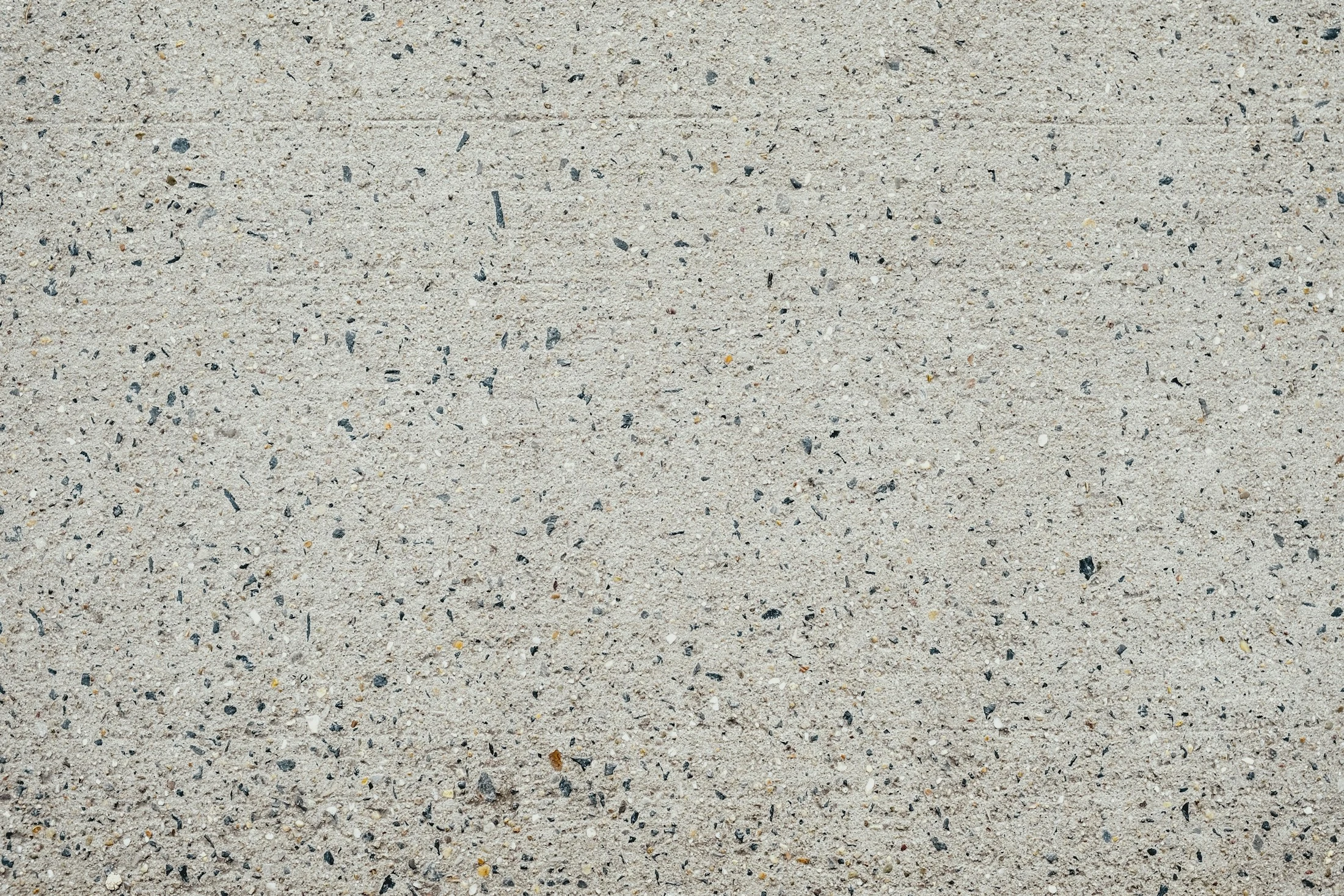
Fire reaction and smoke toxicity codes in rail concourses, airport terminals, underground walkways, and hospital egress corridors routinely eliminate organic polymer binders from floor finishes. Precast inorganic terrazzo uses hydraulic Portland or sulfoaluminate cement blended with mineral pozzolans and marble, quartz, or granite chippings, containing zero combustible organic resin and qualifying for Euroclass A1fl under EN 13501-1 (and Class A1 under GB 8624).
Resin-bonded precast terrazzo incorporates 6% to 10% unsaturated polyester or epoxy resin by mass, which sustains thermal decomposition under radiant fire flux and typically achieves Bfl-s1 or Cfl-s1 ratings. Where public life-safety schedules prohibit organic smoke generation along high-occupancy escape routes, inorganic cement terrazzo satisfies statutory fire marshal audits directly without requiring project-specific fire-retardant resin testing or design waivers.
How Does Subfloor Moisture Vapor Affect Cement Terrazzo vs. Resin Terrazzo?
Ground-supported concrete slabs and fast-track commercial screeds frequently emit residual moisture vapor above 2.5% CM or 75% internal relative humidity, creating severe debonding risk for impermeable resin-bound tiles. Resin terrazzo acts as a vapor barrier; upward capillary moisture condenses at the adhesive interface, hydrolyzes polyester ester groups under high cement pH, and triggers upward corner curling.
Inorganic cement terrazzo possesses an open mineral capillary network that breathes in equilibrium with cementitious substrates and bonds reliably with polymer-modified EN 12004 C2TE S1 adhesives. Because cement matrices exhibit initial water absorption between 1.5% and 5.5% by mass (EN 13748-1 limit ≤ 8% for single face), high-traffic concourses apply a breathable fluorochemical or lithium-silicate penetrating sealer after final diamond honing to block coffee, oil, and de-icing salt ingress without trapping subfloor vapor.
Where Do Slab Thickness, Flexural Strength, and Rolling Load Limits Differ?
Mechanical bending capacity dictates minimum tile thickness under motorized floor scrubbers, baggage carts, and maintenance scissor lifts. Under EN 13748-1, precast cement terrazzo achieves flexural breaking strengths of 5.0 to 14.0 MPa (Classes T4 through T6), so commercial public paving requires calibrated thicknesses of 20, 25, or 30 mm laid on a full-contact back-buttered mortar bed free of hollow corner voids.
Resin-bonded terrazzo reaches 25 to 40 MPa flexural strength (EN 14617-2) and < 0.15% water absorption, enabling thinner 15 to 18 mm panels (~38 to 46 kg/m²) where structural dead-load limits or existing elevator threshold heights restrict floor build-up on dry upper stories. Resin matrices also permit bright white or pastel architectural backgrounds without risk of calcium hydroxide efflorescence blooming.
How Do Glazed Atriums, Semi-Outdoor Canopies, and Refinishing Cycles Compare?
Modern commercial lobbies feature full-height low-iron glass curtain walls and indoor-outdoor entrance plazas where solar UV exposure rapidly ages polyester binders. Resin terrazzo exposed to direct daylight develops a visible amber shift across sun-shadow lines within 6 to 18 months, whereas inorganic cement terrazzo preserves consistent matrix tone across interior foyers and covered exterior drop-off zones (specified to EN 13748-2 freeze-thaw resistance).
Over a 20- to 30-year public building lifecycle, both systems support mechanical diamond re-grinding when coarse chippings (4 to 25 mm aggregate grading) extend deep through the structural wear layer. Inorganic cement terrazzo further densifies over decades of service when maintained with lithium-silicate polishing pads, avoiding topical acrylic floor waxes that scuff rapidly under daily 20,000-pedestrian concourse footfall and wheeled luggage traffic.
Standardized Specification & Benchmark Matrix
| Criterion & Test Standard | Inorganic Cement Terrazzo | Resin-Bonded Terrazzo | Primary Specifier Impact |
|---|---|---|---|
| Applicable European Standard | EN 13748-1 (indoor) / EN 13748-2 (outdoor) | EN 15285 / EN 15286 (agglomerated) | Determines CE / DoPC harmonized test suite |
| Reaction to Fire (EN 13501-1) | Euroclass A1fl (non-combustible) | Euroclass Bfl-s1 or Cfl-s1 | A1fl mandatory in subway, airport & hospital egress |
| Flexural Strength & Thickness | 6 – 14 MPa; typically 20 – 30 mm | 25 – 40 MPa; 15 – 25 mm feasible | Cement requires ≥ 20 mm + full-bed support |
| Water Absorption & Vapor Flow | 1.5% – 5.5%; vapor-permeable | 0.02% – 0.15%; vapor-impermeable | Inorganic tolerates damp ground-bearing slabs |
| UV & Semi-Outdoor Stability | UV-stable; EN 13748-2 freeze-thaw options | UV-sensitive (polyester yellows) | Use inorganic across sunlit curtain-wall zones |
| Adhesive System (EN 12004) | C2TE S1 / C2FTE S1 cementitious | R2T two-component low-alkali reactive | Lower adhesive material cost on inorganic tiles |
Public Flooring Terrazzo Specification & Site QA Checklist
- Verify building code fire class (A1fl vs Bfl-s1) and daylight UV exposure lines across glazed lobby perimeters before selecting binder type.
- Test concrete screed moisture via calcium carbide hygrometer (CM method); if residual moisture exceeds 2.0% CM without an epoxy DPM, specify inorganic terrazzo.
- Size inorganic terrazzo thickness (≥ 20 mm for pedestrian concourses, ≥ 25 to 30 mm for scissor-lift and pallet-jack routes) and enforce ≥ 95% back-buttered bed contact.
- Select aggregate hardness mix (combining quartz/granite chips with marble in high-abrasion ticket halls) to meet EN 13748-1 Böhmé or wide-wheel wear classes.
- Specify post-grouting breathable penetrating impregnator and neutral-to-mild-alkaline silicate scrubber maintenance—prohibiting acidic descalers on marble aggregates.
Frequently Asked Technical Questions
Can precast inorganic cement terrazzo be installed over hydronic radiant floor heating?
Yes. Inorganic cement terrazzo has a linear thermal expansion coefficient (~1.0 to 1.4 × 10⁻⁵ °C⁻¹) close to concrete screeds and bonds reliably with deformable EN 12004 C2TE S1 adhesives when heating commissioning protocols and movement joints are followed.
Does inorganic cement terrazzo stain more easily than resin terrazzo in food courts?
Unsealed cement matrices are more porous than polyester resin, so food courts must apply a penetrating fluoropolymer stain-repellent sealer after installation and wipe acidic spills promptly before calcite aggregates etch.
What joint width is recommended for 600×600mm or 800×800mm precast public terrazzo tiles?
Specify 2 to 3 mm rectified tile joints grouted with colour-matched polymer-modified or epoxy grout, supplemented by 8 to 10 mm movement joints every 5 to 6 meters and along structural columns.