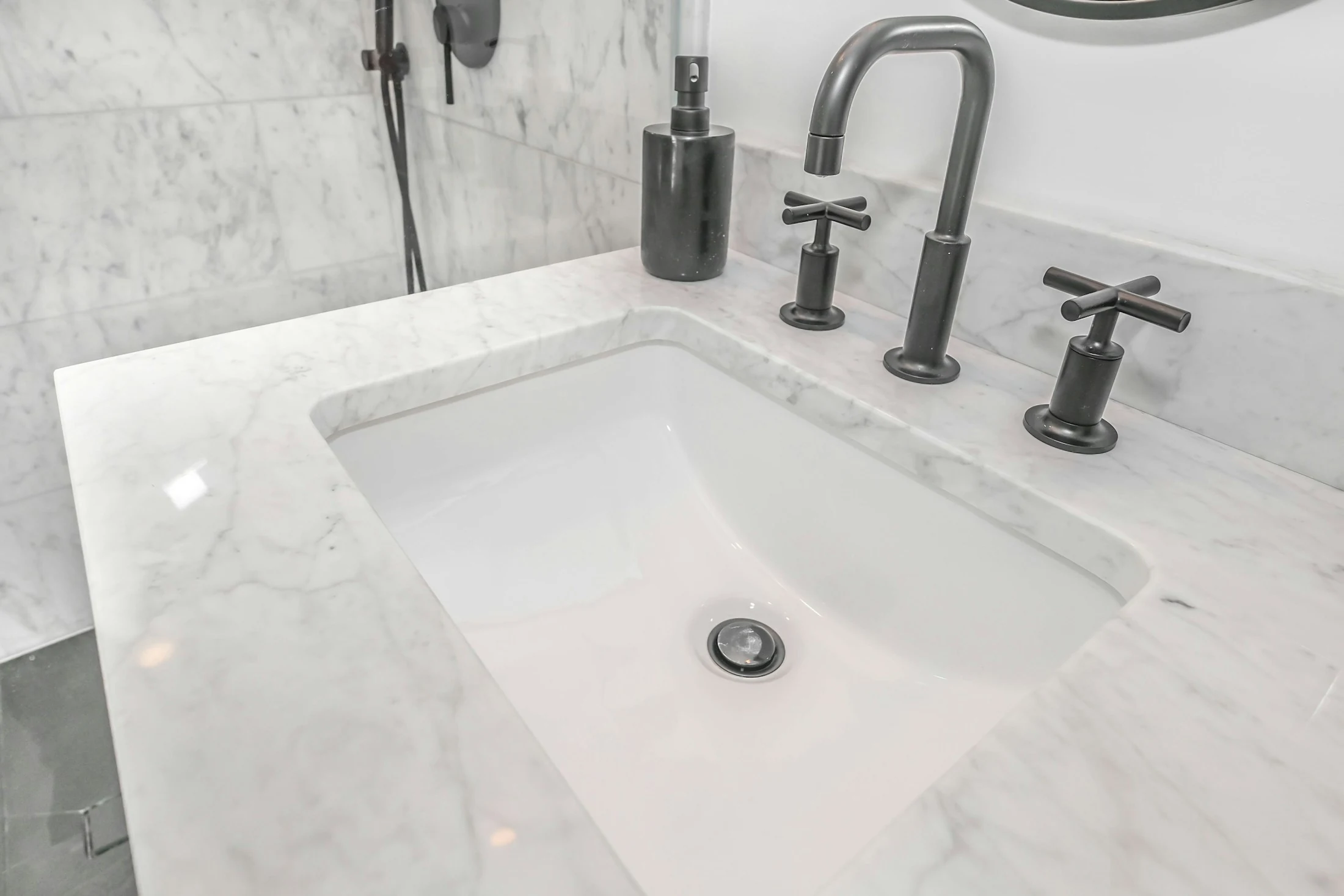
How Do EN 14617 Test Methods Measure Agglomerated Stone?
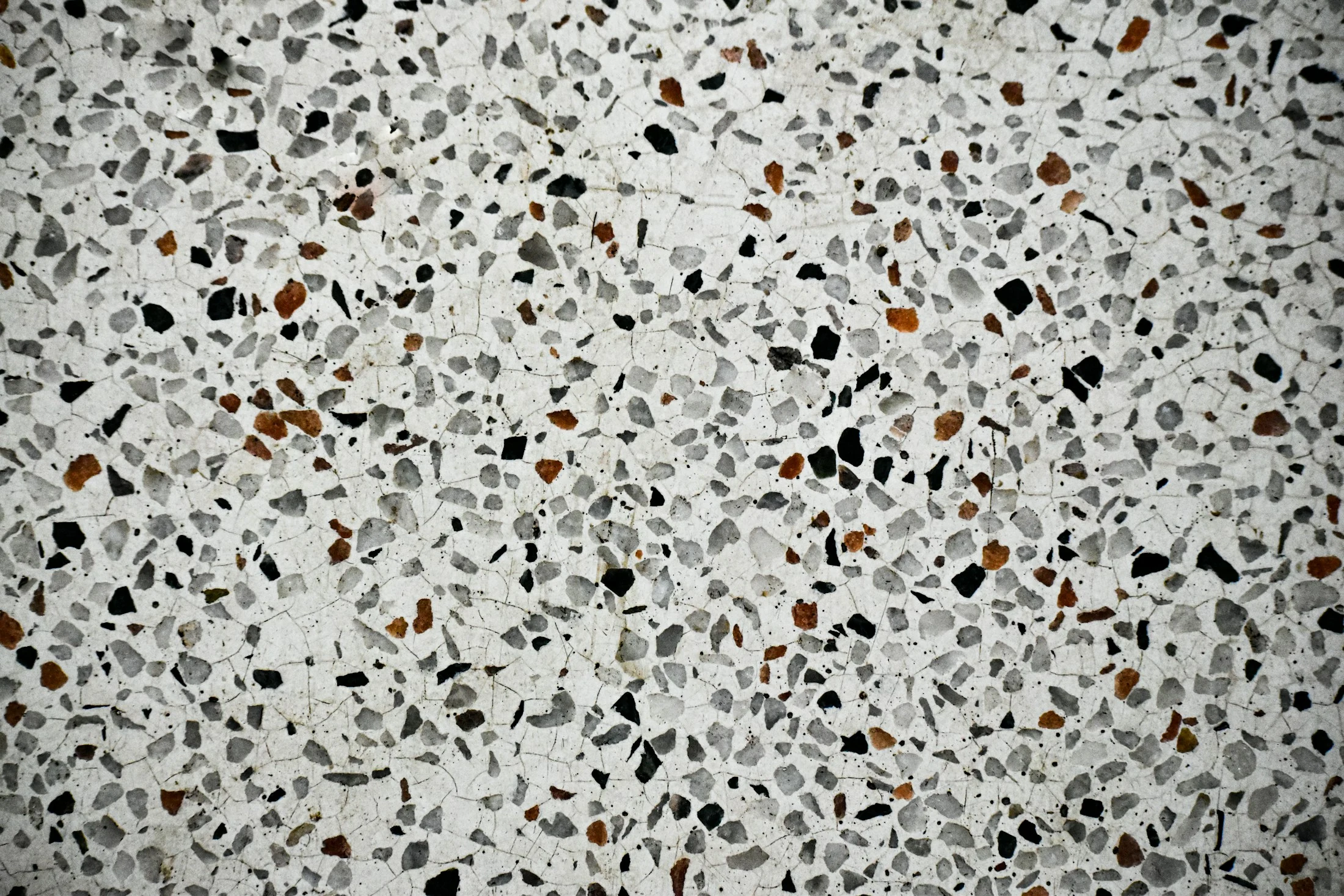
The EN 14617 standard series quantifies resin-bonded and cement-bonded agglomerated stone performance across 12 test protocols referenced by EN 15285 and EN 15286: dense resin-bonded marble slabs typically measure 0.02% to 0.25% water absorption (EN 14617-1), 25 to 42 MPa flexural strength (EN 14617-2), Class A or B moisture stability (EN 14617-12), and Class C1 acid sensitivity (EN 14617-10).
Why Cannot Natural Stone Standards Substitute for EN 14617 on Agglomerated Slabs?
Applying natural dimension stone protocols such as EN 12372 or ASTM C97 without EN 14617 misses polymer-specific viscoelastic creep, moisture curling, and resin cure sensitivity. Agglomerated stone combines crushed rock aggregates with either organic thermoset resins or hydraulic cements, creating composite interfaces whose drying temperature and loading rate must be controlled to prevent binder softening before testing.
In EN 14617-1, specimens are conditioned at 70 ± 5 °C rather than the 105 °C oven temperature used on some natural stones, protecting unsaturated polyester chains from artificial thermal degradation prior to vacuum water saturation. Similarly, EN 14617-2 scales three-point bending span and loading speed to slab thickness, yielding repeatable flexural modulus values between 25 and 42 MPa for resin-bonded marble and 8 to 16 MPa for cement-bonded slabs.
How Do EN 14617-4 Abrasion and EN 14617-9 Impact Tests Predict Floor Wear?
EN 14617-4 measures abrasion resistance via chord length in millimeters rather than mass loss, meaning a smaller millimeter reading denotes higher wear resistance. A rotating 200 mm wide steel disc fed with F80 white fused alumina grit grinds the stone face for 75 revolutions under a fixed contact load, producing typical groove chord lengths of 26 to 33 mm on calcareous engineered marble and 18 to 23 mm on quartz-rich slabs.
Specifiers comparing Asian JC/T 908 test certificates against European submittals should note that JC/T 908 Appendix C reports abraded volume in cubic millimeters (commonly 250 to 350 mm³ against a ≤ 500 mm³ threshold), which cannot be algebraically converted into EN 14617-4 chord millimeters without re-testing. Impact toughness under EN 14617-9 drops a 1 kg rounded steel ball in 5 cm height increments onto a sand-bedded 200 × 200 mm tile until fracture, reporting rupture energy in Joules.
Why Is EN 14617-12 Dimensional Stability Class A, B, or C Critical for Tile Setting?
EN 14617-12 dimensional stability classification is the single decisive lab metric governing adhesive selection and floor curling prevention on agglomerated stone. During testing, horizontal slab strips rest over a water-saturated pad on one face while dial gauges record vertical upward deflection after 6 and 24 hours of one-sided moisture exposure, simulating freshly troweled wet mortar beneath the stone.
Slabs deflecting ≤ 0.3 mm classify as Class A (low moisture sensitivity), > 0.3 to ≤ 0.6 mm as Class B (moderate sensitivity), and > 0.6 mm as Class C (high sensitivity requiring zero-water reactive adhesives). Pairing EN 14617-12 stability data with EN 14617-11 linear thermal expansion (-20 °C to +80 °C, typically 18 to 35 × 10⁻⁶ K⁻¹ for resin marble) allows engineers to size perimeter expansion joints and reject wet sand-cement screeding.
How Should Buyers Audit EN 14617-10 Chemical Class and Thermal Shock Reports?
EN 14617-10 exposes polished or honed surfaces to hydrochloric acid (3% v/v) and sodium or potassium hydroxide solutions for 8 hours and 24 hours, grading residual specular gloss retention from Class C4 (≥ 80% reflection retained) down to Class C1 (< 40% retained or visible etching). Calcite-based engineered marble inherently classifies as C1 under acid exposure regardless of topical factory sealers, which must be transparently declared on technical data sheets.
When auditing factory lab reports, procurement engineers should verify that EN 14617-15 compressive strength (50 mm cubes, typically 100 to 145 MPa), EN 14617-6 thermal shock (20 cycles between 70 °C dry heat and 15 °C water spray), and EN 14617-16 geometric flatness (≤ 0.05% to 0.15% of length) were all run on the exact binder formulation and thickness scheduled for tender delivery.
Standardized Specification & Benchmark Matrix
| Standard Part | Measured Property & Condition | Reporting Unit / Class | Typical Resin-Marble Benchmark |
|---|---|---|---|
| EN 14617-1 | Apparent density & vacuum water absorption (70 °C dry) | kg/m³ and % by mass | 2,450 – 2,650 kg/m³; 0.02% – 0.25% |
| EN 14617-2 | Three-point flexural strength under constant load rate | MPa (N/mm²) | 25.0 – 42.0 MPa |
| EN 14617-4 | Wide-wheel abrasion with F80 fused alumina (75 rev) | Groove chord length (mm) | 26.0 – 33.0 mm (lower = harder) |
| EN 14617-9 | Falling 1 kg steel ball impact resistance on sand bed | Rupture energy (Joules) | 3.5 – 6.5 J (at 20 mm thickness) |
| EN 14617-10 | Acid (3% HCl) and alkali surface gloss retention | Class C1 to C4 | Acid: C1 (etches); Alkali: C3 – C4 |
| EN 14617-11 & -12 | Thermal expansion (-20 to +80 °C) & moisture warping | 10⁻⁶ K⁻¹ and Class A/B/C | 18 – 32 × 10⁻⁶ K⁻¹; Class A or B |
Submittal Verification Checklist for EN 14617 Lab Reports
- Confirm the independent testing laboratory holds ISO/IEC 17025 scope covering EN 14617 parts rather than substituting unverified natural-stone test clauses.
- Check specimen thickness recorded on the EN 14617-2 and EN 14617-9 test sheets, as 15 mm slabs fracture at lower impact Joules than 20 or 30 mm slabs.
- Verify EN 14617-12 Class A, B, or C stability before approving tile adhesive chemistry in the architectural specification.
- Ensure EN 14617-4 abrasion numbers are stated as wide-wheel chord millimeters and not confused with Taber index or JC/T 908 volume loss (mm³).
- Cross-reference declared values against the Declaration of Performance (or DoPC) under harmonized product standard EN 15285 for modular floor tiles.
Frequently Asked Technical Questions
Does a lower millimeter value in EN 14617-4 indicate higher or lower abrasion resistance?
A lower millimeter number indicates higher abrasion resistance because EN 14617-4 measures the length of the groove cut into the stone by the standardized steel wheel and corundum grit.
Can ASTM C97 and ASTM C880 reports replace EN 14617 for European CE marking?
No. While ASTM C97 and C880 provide useful North American project benchmarks, CE marking under EN 15285 mandates testing strictly according to the harmonized EN 14617 test series.
Why does engineered marble score Class C1 on EN 14617-10 acid resistance even with low water absorption?
Water absorption below 0.1% reflects tight resin pore filling, whereas exposed calcium carbonate grains on the polished face still react chemically with hydrochloric or organic acids on contact.